 English
 简体中文
简体中文
 عربي
عربي
 Dansk
Dansk
 Deutsch
 Русский язык
 Français
 Pilipino
 suomi
suomi
 한국어
한국어
 Malay
Malay
 Afrikaans isiXhosa
 Zulu, eNingizimu Afrika
 Português
 日本語
日本語
 Svenska
 ภาษาไทย
 Español
 Italiano
 IndonesiaName
 Tiếng Việt

In the summer of 2024, a cold-chain logistics company in California lost an entire truckload of medical supplies — $380,000 worth — in broad daylight, in the middle of Los Angeles.
When investigators pulled the GPS records, everything looked normal. The truck had stopped at the designated loading dock for 23 minutes, then drove off on schedule. No alerts. No anomalies. Clean data.
The cargo had never been on that truck to begin with.
The thieves had done their homework. They knew the GPS device model this company used. They knew it reported location every 60 seconds. They knew dispatchers typically wouldn't check the live feed during a routine loading stop. They timed everything around the tracker's blind spots — and the tracker never noticed a thing.
Cargo Theft Has Gone Professional
This wasn't a lucky break for a desperate thief. It was a planned operation — and it's increasingly the norm.
According to FreightWatch, a cargo security industry group, 'strategic theft' — where criminals research a target company's processes before striking — outnumbered opportunistic smash-and-grab incidents in North America for the first time in 2024.
Two things are driving this shift.
First, information is cheap. Driver forums, freight message boards, and even job postings unintentionally leak details about a company's routes, schedules, and equipment. Thieves mine these sources systematically.
Second, tools are cheap too. AI has made it possible to process all of that data quickly — analyzing historical routes for patterns, spoofing credentials automatically, even purchasing GPS-jamming services tailored to specific device models. Capabilities that once required a sophisticated criminal organization are now available on dark web marketplaces for a few hundred dollars.
Why Traditional GPS Trackers Have Three Structural Blind Spots
GPS trackers were built to answer one question: where is this vehicle? Ten years ago, that was a revolutionary capability. Today, it's table stakes — and it's not enough.
Blind Spot #1: They track the truck, not the cargo.
A GPS device is attached to the vehicle. The cargo is a separate object. In the California case, the truck's location data was perfect — because the truck was exactly where it was supposed to be. The goods just weren't on it. A variation of this tactic is the 'trailer swap' — the driver arrives at destination with an intact-looking load, but somewhere along the route the real goods were replaced with weighted waste. GPS data: normal.
Blind Spot #2: Fixed reporting intervals create a predictable window.
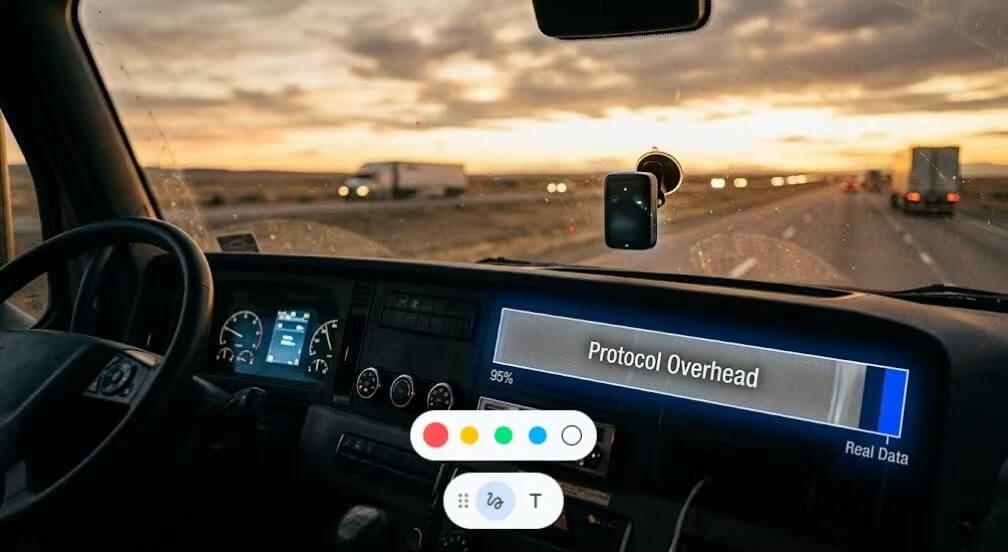
Most basic GPS units report location every 30 seconds to 5 minutes. For fleet management purposes, that's fine. For a thief who knows the interval, it's a schedule. If a device reports every 60 seconds, that's a 59-second window where anything can happen without leaving a trace. Some devices trigger real-time reporting on hard braking or route deviation — so professional thieves simply avoid triggering those conditions.
Blind Spot #3: They can't flag 'legal but suspicious' behavior.
Traditional GPS alerts are rule-based: off-route, geofence breach, speeding — trigger alert. But the most sophisticated theft methods are specifically designed not to trigger any rules. Forged paperwork, impersonated drivers, cargo swaps at legitimate stops — these events look perfectly compliant from a location data perspective. A rules engine can't catch what it doesn't know to look for.
What the Next Generation of Anti-Theft Hardware Actually Does
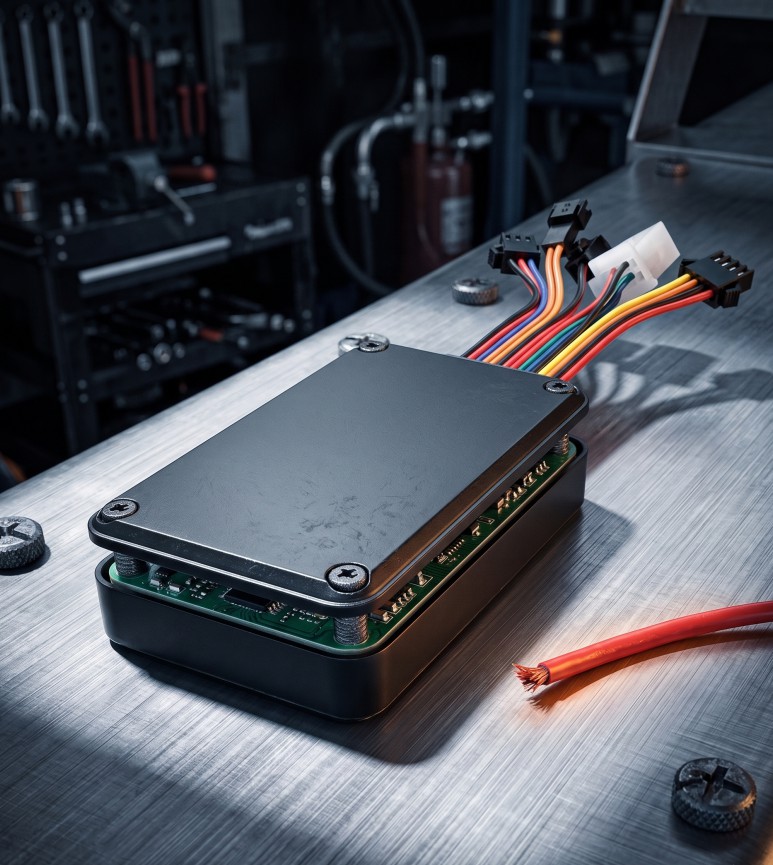
Closing these three blind spots requires three layers of capability — not just a more expensive GPS unit.
Layer 1: Cargo presence detection.
Low-power Bluetooth tags, RFID readers, and cargo door sensors create a 'cargo confirmed on board' signal that's independent of vehicle location. If the trailer door opens at an unplanned stop — or if a cargo tag goes dark — the system pushes an immediate alert, not a report at the next scheduled interval.
Layer 2: Behavioral anomaly detection.
Edge AI on the device itself can identify patterns that position data alone can't catch: a loading stop that runs 40% longer than average, a parking location that's slightly off the usual spot, a driver who leaves the cab for an unusually long period mid-route. None of these signals triggers a rule. Together, they're a risk profile. Because the analysis runs on the device rather than waiting for cloud processing, response time is measured in seconds.
Layer 3: Identity verification at handoff points.
Theft increasingly happens at the handoff — the moment goods change hands. Smart systems integrate with dispatch platforms to confirm geofenced pickup and delivery, tie into driver biometric verification, and build shipper reputation scores based on historical handoff data. Paper documents and phone calls can be faked. Hardware-anchored verification is harder to spoof.
You Don't Have to Rip and Replace Everything
The practical upgrade path for most mid-sized North American fleets isn't a full equipment swap. It's a layered deployment:
• High-value cargo and high-risk lanes: replace traditional GPS with smart terminals that have edge AI capability.
• Standard cargo and routine lanes: add a behavioral anomaly module via software update to existing devices where supported.
• On the cargo itself: attach low-cost Bluetooth presence tags as a lightweight second layer.
This approach costs over 60% less than a full fleet replacement and covers more than 90% of high-risk scenarios.
One Number Worth Remembering
According to U.S. Department of Transportation data, the average time between a cargo theft and a fleet operator discovering the loss is 4.3 hours.
During those 4.3 hours, the GPS tracker is working perfectly. Location data: complete. Route log: clean. Alerts fired: zero.
The goods are already gone.
If you want to assess whether your current fleet hardware has coverage gaps, we offer a 15-minute configuration review. No commitment required.



















 Tansy
Tansy

