 English
 简体中文
简体中文
 عربي
عربي
 Dansk
Dansk
 Deutsch
 Русский язык
 Français
 Pilipino
 suomi
suomi
 한국어
한국어
 Malay
Malay
 Afrikaans isiXhosa
 Zulu, eNingizimu Afrika
 Português
 日本語
日本語
 Svenska
 ภาษาไทย
 Español
 Italiano
 IndonesiaName
 Tiếng Việt

2 AM Silence: The Real Cost of a $15 Tracker
Picture this: 2 AM, your phone blows up. A major client's refrigerated truck carrying $200,000 in pharmaceuticals has gone dark mid-cross-border haul. You check the platform—the cheap tracker's last report was 4 hours ago, showing a location in the middle of the ocean (classic GPS drift).
You try remote reboot. Nothing. Send commands. Error.
At that moment, the device has vanished from the internet. It's no longer smart hardware—just a useless plastic brick bolted under the truck. That's the price: you saved $10 per unit on procurement, and now you're gambling hundreds of thousands in cargo and your company's reputation.
The Root Cause: Built to Fail
Why do these devices die after just months? Because they were never designed to last.
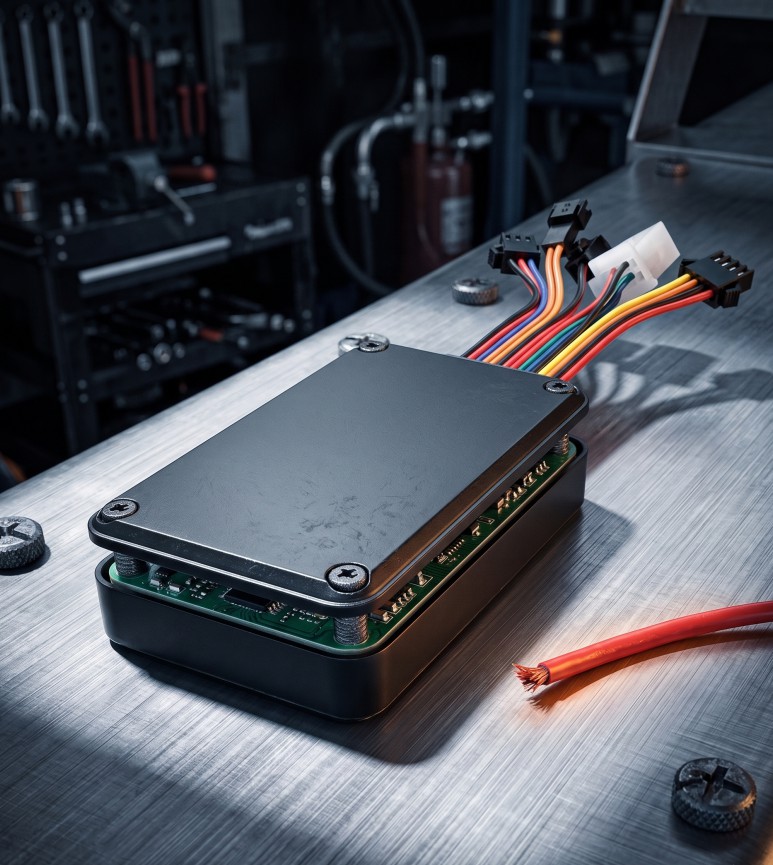
- Fake Watchdog ProtectionCheap firmware is often a mess. When the device hovers on the edge of 4G coverage, it can lock up in logic deadlocks. A proper unit needs multi-level hardware watchdogs. Budget ones skip the $0.50 external circuit and rely only on the CPU's built-in software watchdog. If the kernel crashes, the watchdog dies too. No auto-recovery—just wait for the battery to drain or manual intervention.
- Power System SuicideOur V6B-4G offers 2500–10,000 mAh batteries not just for long standby. The instant a vehicle engine starts, voltage spikes can fry weak capacitors. Cheap suppliers omit transient voltage suppressors (TVS) to save another $0.50. That 'saving' randomly executes the mainboard.
The Trap: The Art of Cutting Corners
In IoT, cost-cutting is an art form:
- Refurbished Modules: Communication chips salvaged from scrap boards, already at the end of their write cycles.
- Fake Gain Antennas: 10mm ceramic patches pretending to be 25mm high-gain ones. Drive into an urban canyon, and signal drops to zero.
The Veyloc Standard: We've Been There
At Veyloc, we obsess over hardware because we've taken those 2 AM calls ourselves.
- Dual Watchdog Design: The V6B-4G has an independent hardware timer separate from the CPU. Even if firmware completely crashes, it forces a power-cycle reset in 60 seconds.
- 48-Hour Stress Testing: Every production batch survives high-frequency data upload torture tests. It doesn't look flashy, but it lets fleet managers sleep.
- Redundant Power Protection: Our input handles 100V transient pulses—extra cost that protects against deadly spikes.
Your Bullshit Detector Checklist
Next time a supplier quotes rock-bottom prices, ask their engineers these:
- 1. 'Do you have an external hardware watchdog independent of the MCU?'
(If they hesitate, run.)
- 2. 'How many stages of TVS protection on power input? What surge voltage can it handle?'
- 3. 'What's the measured GPS drift at 75°C high temperature?'




















 Tansy
Tansy

