 English
 简体中文
简体中文
 عربي
عربي
 Dansk
Dansk
 Deutsch
 Русский язык
 Français
 Pilipino
 suomi
suomi
 한국어
한국어
 Malay
Malay
 Afrikaans isiXhosa
 Zulu, eNingizimu Afrika
 Português
 日本語
日本語
 Svenska
 ภาษาไทย
 Español
 Italiano
 IndonesiaName
 Tiếng Việt

The 'Ghost Truck' Scenario
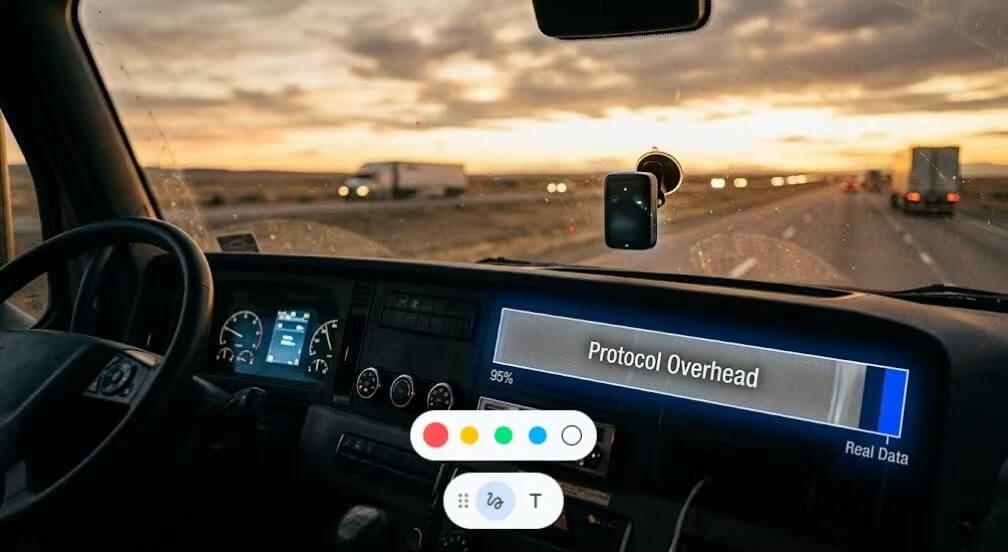
Your fleet is crossing the Nevada desert or the Australian outback. On your dispatch screen, a truck loaded with valuable copper cable suddenly goes gray—'offline.'
You call the driver. He picks up. 'Boss, I've got one bar of 4G—I'm streaming Spotify right now.'
That's the moment that drives you crazy: Why can the driver's phone connect, but your 'industrial-grade' GPS tracker acts dead?
This is a fake dead zone. In these fringe areas, the gap between cheap gear and pro gear is like the difference between a toy gun and a sniper rifle.
The Real Cause: Physics, Not Magic
RF communication is unforgiving physics—no shortcuts allowed.
- 1. Poor Antenna Tuning
- Many factories just solder a generic ceramic patch antenna onto the board without proper impedance matching. Antennas are extremely sensitive to their surroundings. Mount the tracker under a metal-heavy chassis, and the antenna's center frequency drifts (detuning). A 4G antenna can shift so far off-band it receives nothing—like a radio dial nudged just a millimeter into static.
- 2. The 3dB Sensitivity Gap
- In RF, 3dB means double the signal strength. Premium modules (like high-end Quectel or Telit) reach -108dBm sensitivity; cheap ones top out at -105dBm. Near a tower, no difference. At the edge of coverage in rural areasastly, that 3dB is the line between 'connected' and 'no service.' Weak front-end design means the module simply can't hear the tower's faint signal.
The Trap: 'One Antenna Fits All'
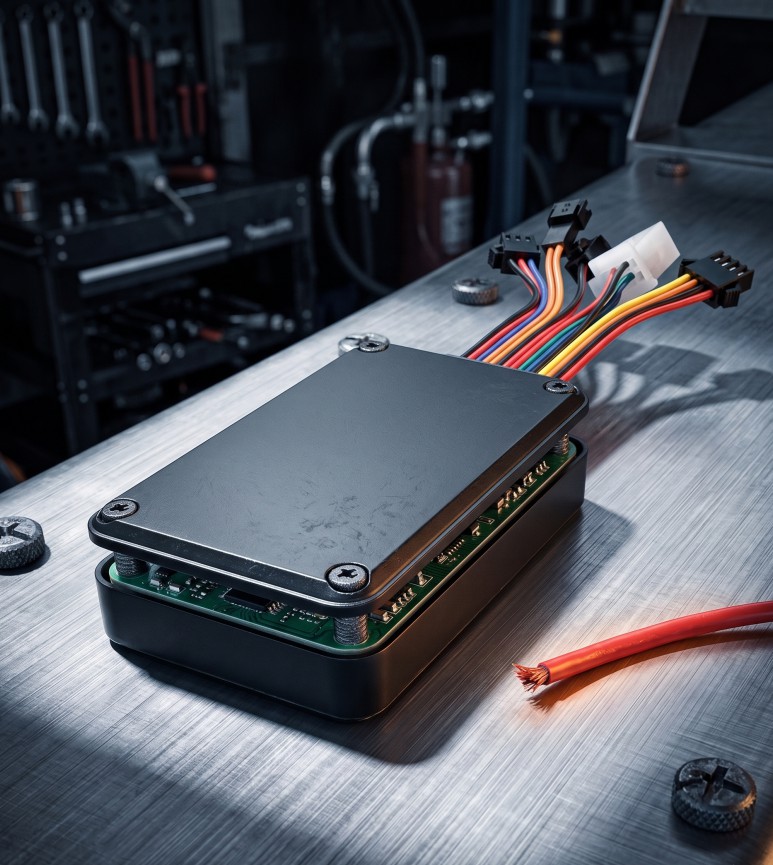
Open a cheap tracker and you'll see the cost-cutting: the same antenna design used across 2G, 4G Cat-1, and Cat-M versions.
That's nonsense. Frequency bands vary wildly (700MHz vs 1800MHz vs 2100MHz). Forcing one untuned antenna to cover everything gives terrible VSWR—most transmit power reflects back as heat instead of going out as signal.
The Veyloc Solution: We Hear the Whisper
At Veyloc, we design for the worst possible coverage.
- Custom LDS/FPC Antennas: No generic ceramics. For our V6B series, we use laser-direct-structured (LDS) or custom flexible (FPC) antennas, specifically tuned and tested for metal vehicle environments. We keep efficiency above 40% even in weak-signal conditions.
- Store-and-Forward Buffering: In true dead zones (tunnels, etc.), we don't lose data. The V6B has 16MB independent Flash storage—not cheap RAM—holding up to 20,000 location points. When signal returns, it automatically uploads everything.
- Low-Noise Amplifiers (LNA): Separate LNAs on GPS and 4G receive paths act like hearing aids, letting the device pick up the fainest tower whispers.
Your Buying Checklist: Real RF Questions
Skip 'what bands does it support?' Ask these instead:
- 1. 'What are your measured TRP (Total Radiated Power) and TIS (Total Isotropic Sensitivity) values?' (If they can't provide TIS data, they don't own an anechoic chamber.)
- 2. 'How many location points can it store offline? Do they survive power loss?'
(Must be Flash, not RAM.)
- 3. 'Was the antenna tuned for metal vehicle environments? What's the VSWR spec?' (Pro standard: under 3.0; excellent: under 2.5.)



















 Tansy
Tansy

