 English
 简体中文
简体中文
 عربي
عربي
 Dansk
Dansk
 Deutsch
 Русский язык
 Français
 Pilipino
 suomi
suomi
 한국어
한국어
 Malay
Malay
 Afrikaans isiXhosa
 Zulu, eNingizimu Afrika
 Português
 日本語
日本語
 Svenska
 ภาษาไทย
 Español
 Italiano
 IndonesiaName
 Tiếng Việt

The 'Brick' in the Container
Every asset manager’s nightmare:
Your container just docked in Rotterdam. The customer demands an immediate location update. Your platform shows the tracker still has “85% battery” (based on that useless linear calculation). You send a wake-up command.
One minute passes. Then an hour. Nothing.
The device that promised “3-year ultra-long standby” went completely silent at month 11. It turned into an expensive brick, vanishing from your digital view along with the cargo it was supposed to protect. Now you get to explain to the client why your long-standby GPS tracker couldn’t even make it through one year.
This isn’t bad luck. It’s physics passing a death sentence.
The Real Killers: Chemistry Ignores Your Spreadsheet
Many suppliers calculate battery life in a way that insults basic intelligence: total capacity (say 4000 mAh) divided by daily consumption. Fine for grade-school math, disastrous for electrochemistry.
The silent assassins that kill devices early are two overlooked factors:
- Heat Accelerates Self-DischargeLithium thionyl chloride (Li-SOCl₂) batteries are rated at 1–2% self-discharge per year—but only at a steady 25°C in the lab. Real life is brutal. If your container bakes in summer Dubai sun, internal temps easily hit 70°C+. Per the Arrhenius equation, every 10°C rise roughly doubles reaction rates. At those temperatures, passive self-discharge can jump to 10% or more per year. Your battery isn’t drained by the device—it evaporates in the heat.
- Passivation Effect: The Battery’s “Clot”Few salespeople can explain this properly. These batteries form a protective passivation layer on the anode to reduce self-discharge during storage. It’s a double-edged sword: it slows leakage but raises internal resistance. After months of sleep, when the device suddenly needs a high-power 4G burst (300 mA+ spike), that thick layer can’t break down fast enough. The huge resistance causes voltage to crash below the cutoff threshold. Result: plenty of capacity left, but the device browns out, reboots, or never wakes again.
The Trap: The “Theoretical” Numbers Game
Suppliers love “ideal-condition fraud”:
- Ignoring satellite acquisition power: They assume a 30-second fix. In a shielded warehouse, the GPS module might hunt for 3 minutes (long TTFF). Those extra 2.5 minutes multiply power draw dramatically.
- Ignoring retransmissions: In remote weak-signal areas, the modem will retry connections endlessly. One failed handshake can burn as much power as three normal days of standby.
- Linear battery gauges: Cheap devices estimate remaining power from voltage. Lithium thionyl chloride has an almost flat discharge curve—voltage stays high until the very end. That “85%” you see can drop to 0% in seconds.
The Veyloc Fix: Built for the Real World
At Veyloc, we don’t trust theoretical numbers. We build field-proven gear.
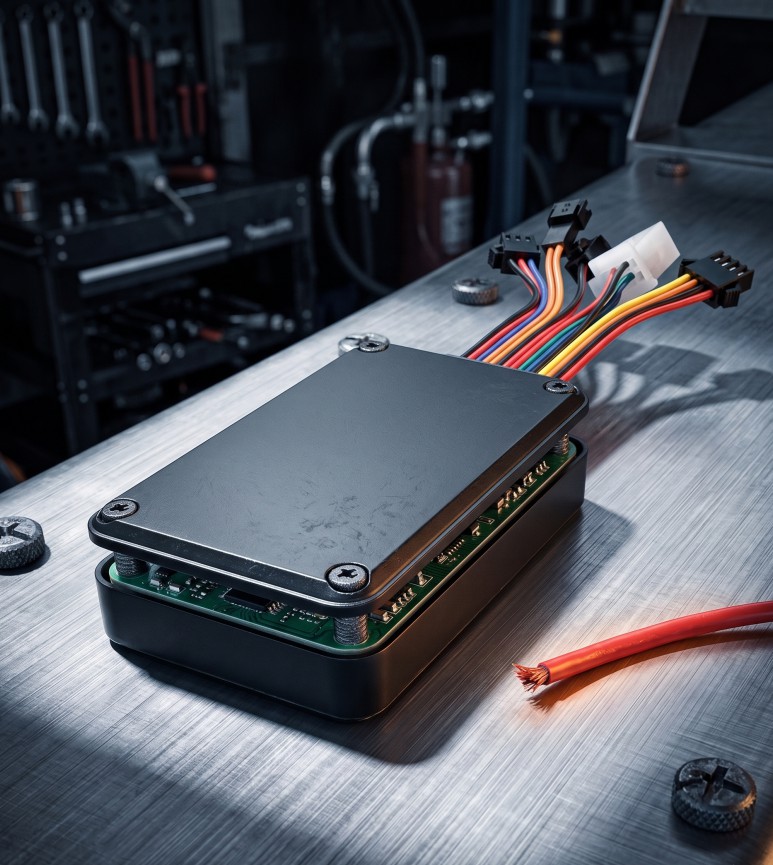
- SPC/HLC Hybrid Capacitor Design: To beat passivation, our V6B series pairs the battery with a super pulse capacitor (like a power buffer tank). High-current bursts come from the capacitor, not the battery itself. This eliminates voltage drops and ensures reliable GPS asset tracker battery life.
- Temperature-Compensated Algorithms: Our firmware doesn’t guess. It reads onboard temperature history and dynamically adjusts remaining-capacity estimates, deducting extra losses from hot periods.
- Aggressive Sleep Strategy: If the device fails satellite acquisition three times or sees RSSI below threshold, it aborts attempts and goes into deep sleep until conditions improve. We’d rather it report an hour late than burn half a year’s life on a hopeless connection.
Your Buying Checklist: Make Suppliers Sweat
Don’t trust glossy slides. Hit them with these three questions:
- 1. “Does your battery solution include a parallel UPC/HLC pulse capacitor?” (If not, expect failures at high current in cold or after long sleep.)
- 2. “Can you provide real discharge curves at –20°C and +70°C, not just 25°C lab data?”
- 3. “If the device is in a dead zone, does the firmware have a ‘give-up-and-sleep’ logic to preserve power?”
Get straight answers—your assets depend on it.




















 Tansy
Tansy

