 English
 简体中文
简体中文
 عربي
عربي
 Dansk
Dansk
 Deutsch
 Русский язык
 Français
 Pilipino
 suomi
suomi
 한국어
한국어
 Malay
Malay
 Afrikaans isiXhosa
 Zulu, eNingizimu Afrika
 Português
 日本語
日本語
 Svenska
 ภาษาไทย
 Español
 Italiano
 IndonesiaName
 Tiếng Việt

Mounting a passenger-car GPS tracker on heavy machinery is the most expensive joke in this industry.
Many salespeople slap a “Heavy Duty” label on a plastic box and call it good, but physics doesn’t read labels. As an engineer who’s crawled under countless excavator chassis, I’ve seen exactly how these zero-engineering devices die in the mines.
Today we talk about the “vibration murder” that costs heavy equipment fleets a fortune every year.
The 'Maraca' Nightmare on the Quarry
This horror scene plays out monthly in mines and job sites:
You drop serious money on a Caterpillar D9 bulldozer. To stop fuel theft or theft of the machine itself, you let the supplier install their “best-selling” 4G tracker.
Month one: perfect. Month two: starts dropping offline. Month three: completely gone from the map.
You send a tech. He cuts the zip ties, pulls off the black plastic box, and doesn’t even need a multimeter. He just shakes it by his ear and hears “rattle-rattle” — like a Mexican maraca.
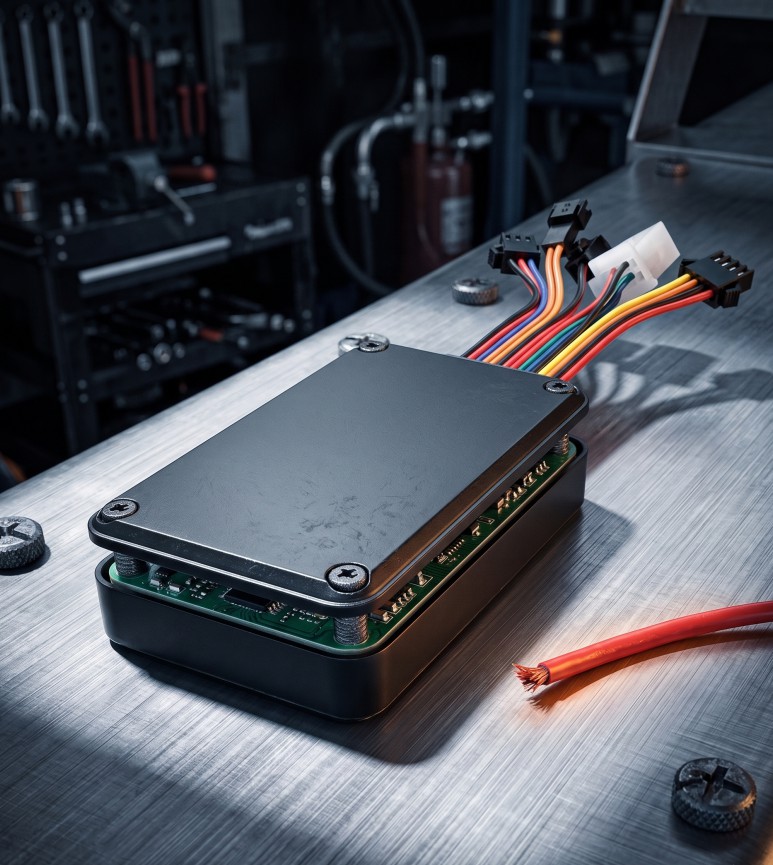
Your tracker isn’t offline. It was shaken to pieces. Capacitors, antenna, SIM slot — everything has broken off the board and turned into expensive electronic junk.
The Root Cause: Solder Joint Fatigue and Resonant Frequencies
Why does gear that lasts 5 years in a car die in under 3 months on a bulldozer? Look at the micro-physics.
- 1.Micro-Cracks in Solder Joints
- Heavy machines (excavators, bulldozers, rollers) create constant low-frequency, high-amplitude vibration (5–50 Hz) from diesel engines and tracks.
Cheap trackers use standard lead-free solder on the PCBA. Large components (big capacitors, comm modules, antennas) experience uneven stress. Invisible micro-cracks form, resistance skyrockets, cracks grow, and joints finally snap. On your screen it just looks like “dropped offline.”
- 2.The Battery Hammer
- Normal GPS trackers glue the lithium battery to the case with double-sided tape. Heat softens the glue, violent shaking loosens it. A 200–300 g battery becomes a hammer inside the box, smashing the CPU and RF circuits dozens of times per second until the board is destroyed.
The Trap: The 'Double-Sided Tape' Industrial Standard
The biggest scam is selling consumer-grade solutions as “industrial.”
Their “vibration protection” is usually cheap EVA foam or instructions that say “use thicker tape and two zip ties.”
Under 10G shocks, tape and foam do nothing. They blame “poor installation” to hide weak design.
The Veyloc Standard: Solid-State Survival
At Veyloc we don’t buffer vibration — we eliminate movement.
- Full Epoxy Potting: After testing, we pour industrial epoxy or polyurethane into the entire case. Everything (board, components, battery) becomes one solid brick. No gaps = no breakage.
- Through-Hole + UV Glue: Heavy parts use through-hole soldering plus UV-cured glue at the base for extra strength.
- MIL-STD-810G Vibration Testing: Every batch passes random vibration sweeps before shipping.
The 'Heavy Duty' Checklist
Next time you buy trackers for heavy equipment, skip the software talk and ask:
- 1.“Is the board fully potted with epoxy, or just conformal coated?” (Coating stops moisture, not vibration.)
- 2.“How is the battery physically fixed inside?” (If double-sided tape, walk away.)
- 3.“Which vibration standard did you pass? Show me the MIL-STD-810G or SAE J1455 third-party report.” (No report = fake industrial grade.)




















 Tansy
Tansy

